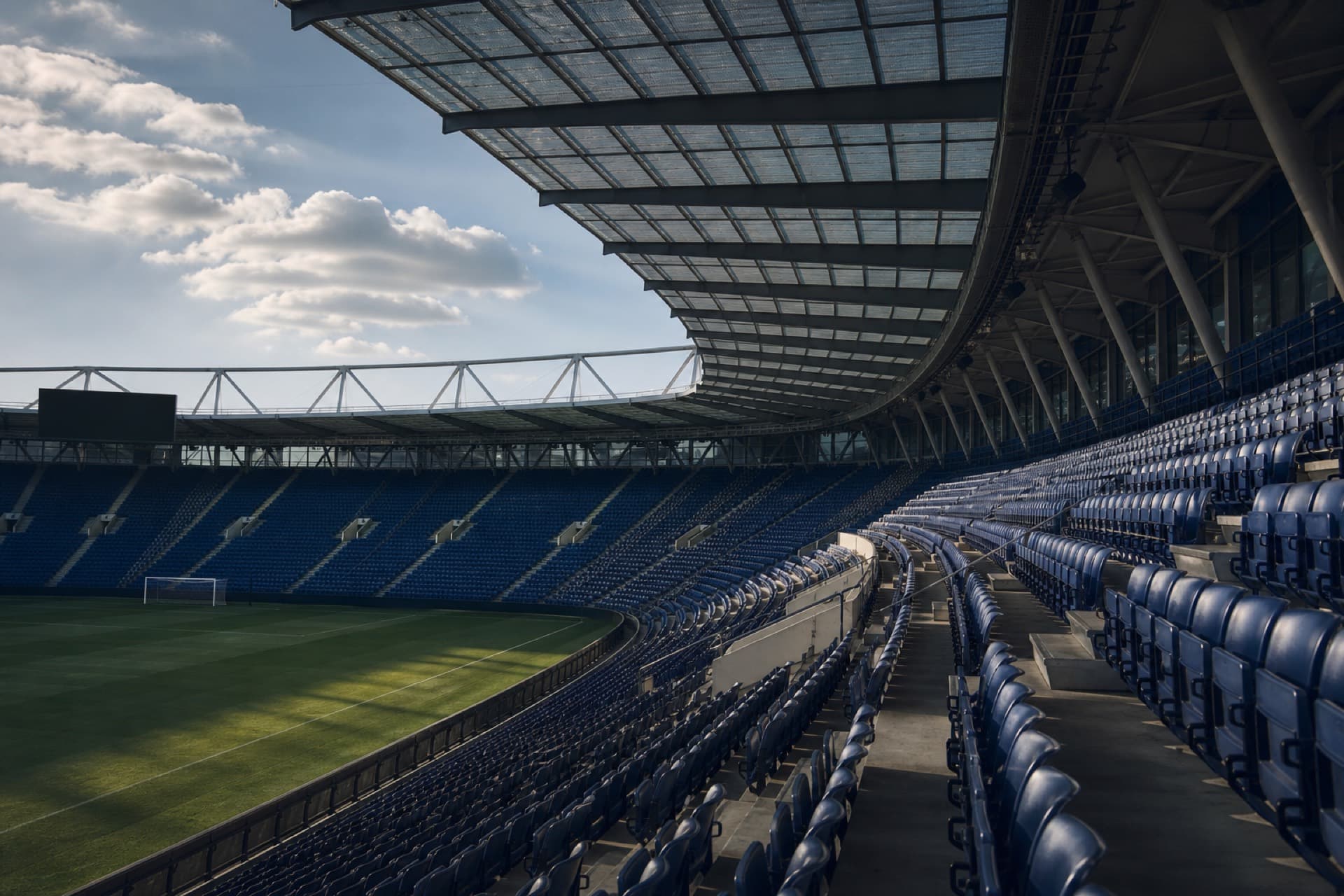
The last time Tottenham played at the City Ground was 14 December 2025. Nottingham Forest won 3-0. Spurs were not, in that moment, managed by Igor Tudor — Thomas Frank was still nominally in charge, though the end was already visible.
A little more than three months later, on 22 March 2026, Forest came to Tottenham Hotspur Stadium and won 3-0 again. This time Tudor was the manager. This time, immediately after the final whistle, he learned that his father had died. He was sacked within days.
These are not just unhappy facts to be noted and moved on from. They are the sediment that a football club deposits when it has been run reactively for the better part of a decade, and they rest beneath every optimistic framing of what is supposed to be, again, a new era.
So here we go, again, to Nottingham Forest. The question worth asking — not in the spirit of misery, but in the spirit of honest accounting — is whether a club that has cycled through four managers in fifteen months can still generate the conditions in which any manager, however talented, is actually given a fair chance to build something.
The surface facts of this summer are, on paper, extraordinary. Tottenham have spent over £229m in transfer fees — their largest single summer outlay on record. Sandro Tonali arrived from Newcastle for a guaranteed £92.5m, a club record. Mateus Fernandes came from relegated West Ham for £85m. Jan Paul van Hecke, who worked directly under De Zerbi at Brighton and understands his system from the inside, was added for £52m. This is not a club that has gone cheap on its latest managerial cycle. This is a club that has bet heavily on it.
And yet two Premier League games into the season, Spurs have zero points, zero league goals, and a performance against Newcastle on Monday that illustrated the gap between a team that possesses the ball fluently and a team that knows what to do with it. The first half against Newcastle was, by most accounts, encouraging — high press, structured buildup, the kind of territorial dominance that De Zerbi's system is designed to produce. Then Tonali, the £92.5m midfield anchor, switched off. Elanga ran clear. Wissa, moments later, finished a second. By the time the final whistle came, the match was effectively decided.
Possession without penetration is not yet a threat. It is a beginning, nothing more. De Zerbi knows this better than anyone — the question is whether Tottenham's squad, assembled in haste across multiple windows, can execute the final third detail his system demands.
This is where it is worth separating the legitimate excitement about De Zerbi from the structural problem his appointment cannot, by itself, solve. He is a genuinely serious coach. His work at Sassuolo — turning a modest provincial club into one of Serie A's most watchable sides — was not an accident. Brighton under his management finished sixth in 2022/23, their highest finish in league history, playing football that made neutral observers pay attention. He demanded technical intelligence, pressing discipline, and a willingness to build through pressure. These are not empty buzzwords. They describe a real, transferable methodology.
But methodology takes time. It takes a pre-season, ideally. It takes a squad that has absorbed its principles across months of daily work, not weeks. De Zerbi joined Spurs on 31 March 2026. He guided them to 11 points from seven games at the end of a fractured season — a holding operation, admirable in its way, but not a foundation. The real pre-season, the first real opportunity to embed his ideas from the ground up, has been this summer. And he has had roughly two and a half months of that before competitive football began.
Pochettino, for context, had more than a full season before he had integrated his press-based identity into the squad's muscle memory. Mauricio Pochettino — the last Spurs manager to build something that felt genuinely durable — was appointed in May 2014 and had the club playing recognisably his football by Christmas of that year. By his second season, the foundations of a Champions League finalist were visible. He had continuity. He had time. He had, crucially, an ownership that was willing to let the process play out even when the results were mixed.
What has changed since is not entirely about ownership philosophy, though Daniel Levy's record of managerial patience — or the lack of it — is well documented. What has changed is that each successive failure has narrowed the window the next manager gets. Postecoglou won the Europa League in May 2025 and was sacked in June. Frank was given eight months before results made his position untenable. Tudor lasted roughly six and a half weeks. Every short-termist decision makes the next manager's position more fragile, because the infrastructure of trust — players knowing the system will be consistent, staff understanding that instability serves no one — erodes with each change.
De Zerbi is not walking into a blank slate. He is walking into a club where the last three regimes have all imploded. Where players have learned, across a compressed and chaotic period, that commitment to a manager's project is a speculative bet against institutional whim. Where the conversation in the dressing room is not about the football but about how long this one lasts.
The money spent this summer says something important: that the board understands, at some level, that the problem is not the quality of the squad but the stability around it. Tonali, van Hecke, and the others were not brought in as short-term fixes. They were brought in as pieces of something meant to last. But pieces do not build themselves into a structure. Structure requires time. It requires a manager to be allowed to make mistakes, to learn from them, and to correct course without the threat of summary removal hanging over every decision.
De Zerbi has the credentials to do this. Brighton finished sixth under him; Sassuolo played some of the best football outside Europe's traditional elite. He has a track record of turning moderate resources into competitive football. But credentials are not immunity. Pochettino was the most ambitious managerial talent the club had seen in a generation, and even he eventually wore out the patience of a board that found continuity exhausting.
Saturday at Nottingham Forest, then, is not just a test of De Zerbi's ability to implement his system. It is a test of something far more consequential: whether Tottenham Hotspur can sustain one. It is a test of whether this club, having destroyed the conditions for success three times in fifteen months, has learned anything from the damage. The answer to that question will not be visible in tactics or formation. It will only be visible in patience.